If you work in construction, utilities, or municipal infrastructure, you've likely heard the term "hydro excavation" or "hydrovac." These methods have rapidly become the industry standard for safe digging near underground utilities — and for good reason. In this guide, we'll explain exactly what hydro excavation is, how the technology works, and why contractors and municipalities across South Florida rely on it for their most sensitive excavation projects.
What Is Hydro Excavation?
Hydro excavation is a non-destructive digging method that uses high-pressure water to break up soil and a powerful industrial vacuum to simultaneously remove the loosened material. The result is a precise, controlled excavation that exposes buried utilities, pipes, cables, and other underground infrastructure without the risk of mechanical damage.
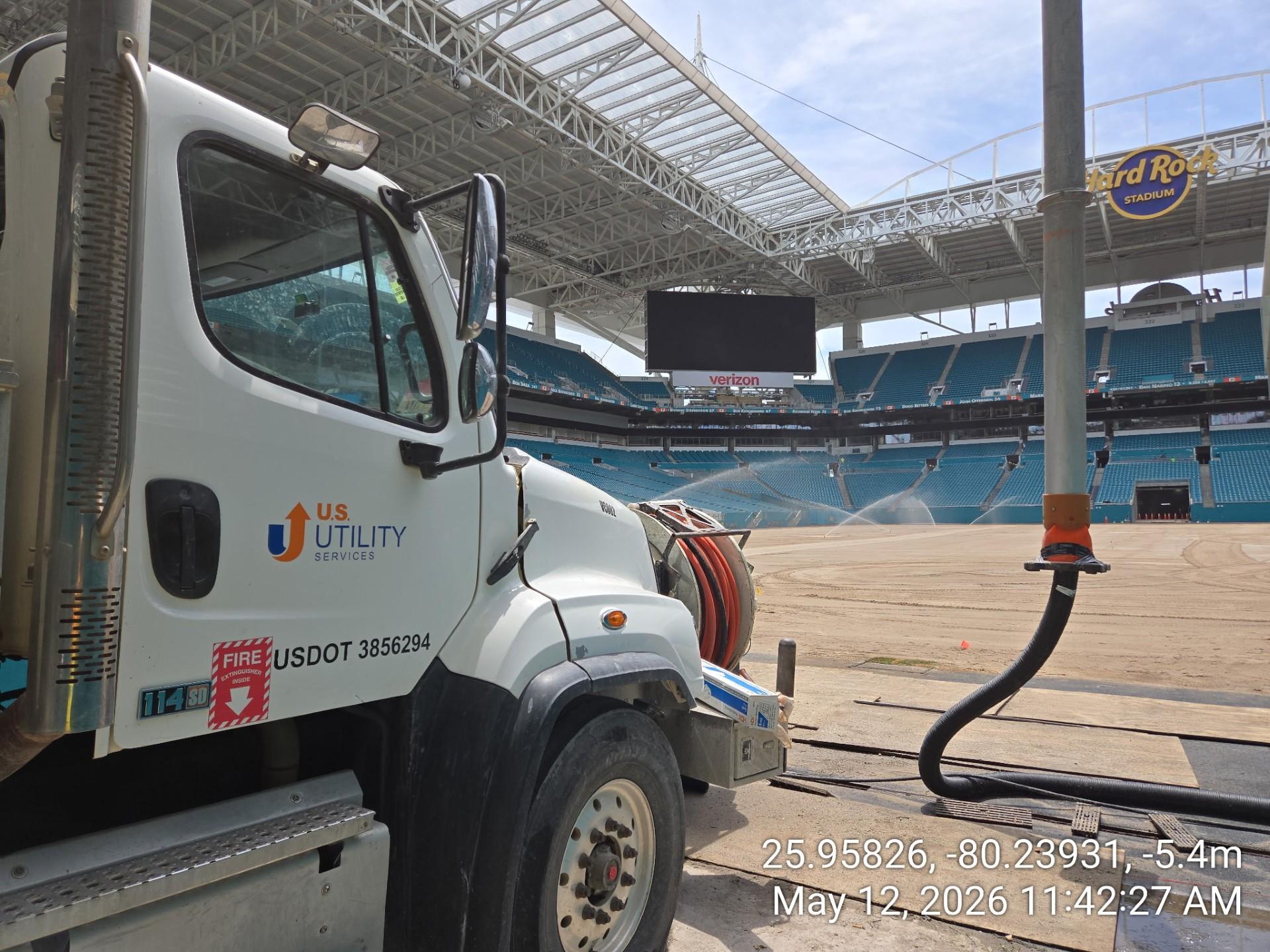
The process is also called "hydrovac excavation" — a reference to the combination of hydraulic water pressure and vacuum suction that makes the technology work. Hydrovac trucks are essentially mobile excavation systems, carrying a water tank, high-pressure pump, vacuum system, and large-capacity debris storage tank all on a single vehicle.
How Does Hydrovac Work?
The operation of a hydrovac system is straightforward but effective. The operator directs a high-pressure water wand — delivering water at pressures typically ranging from 1,000 to 2,000 PSI — into the ground at the excavation point. The pressurized water stream breaks apart the soil, turning it into a slurry. Simultaneously, a large-diameter vacuum hose positioned directly above the excavation draws the slurry up and deposits it into the debris tank mounted on the truck.
The process is carefully controlled: the operator can adjust water pressure, nozzle type, and vacuum settings based on soil type, proximity to utilities, and required excavation precision. In South Florida's sandy coastal soils, hydrovac is particularly efficient — the loose, granular material breaks apart quickly and vacuums cleanly. For harder soils or clay conditions, higher-pressure settings or air excavation methods may be used.
Modern hydrovac trucks can carry thousands of gallons of water and hundreds of cubic yards of spoil material per load. Extended-reach hoses allow the truck to stay on the road or in a staging area while the operator works up to 600 feet away — a major advantage on urban job sites where access is limited.
Key Applications for Hydro Excavation
Hydro excavation is used across a wide range of applications in the utility and construction industries:
- Potholing / Daylighting: Exposing buried utilities to verify their exact location, depth, and condition before mechanical excavation begins. This is one of the most common uses and is required by FDOT and most utilities before mechanical equipment approaches their infrastructure.
- Slot Trenching: Cutting narrow, precise trenches for new utility installations — gas lines, fiber optic cables, electrical conduits — in areas where standard trenching equipment would create excessive disturbance.
- Remote Excavation: Using hose extensions to excavate in areas inaccessible to conventional equipment, such as under sidewalks, near building foundations, or in landscaped medians.
- Utility Crossing Exposure: Exposing utility crossings at road intersections or during pipe rehabilitation projects to confirm clearances and prevent conflicts.
- Cold Weather Excavation: Hydrovac's hot water capability makes it effective in frozen ground conditions — a less common but important advantage in northern climates.
Benefits of Hydro Excavation vs. Traditional Digging
The comparison between hydro excavation and traditional mechanical excavation comes down to one fundamental difference: risk.
Traditional excavation — backhoes, trenchers, and excavators — is effective and economical in open areas with no underground utility conflicts. But these machines operate with immense force and cannot distinguish between dirt and a buried gas main. The consequences of a utility strike range from costly service outages to catastrophic explosions and fatalities. According to the Common Ground Alliance, a utility strike occurs in the United States approximately every six minutes.
Hydro excavation eliminates this category of risk. The water jet, even at high pressure, will not rupture a properly installed utility pipe or cable. The vacuum cannot generate forces that would damage buried infrastructure. Operators work with complete visual access to the excavation face at all times, allowing them to stop the moment a utility is reached rather than driving through it.
The practical benefits extend beyond safety. Hydrovac excavation produces cleaner excavations with minimal over-dig, reducing the cost of backfill and compaction. It works effectively in tight spaces where mechanical equipment can't reach. And critically, it eliminates the disruption, liability, and cost of a utility strike — which regularly runs to tens or hundreds of thousands of dollars when repair costs, service restoration, regulatory fines, and project delays are combined.
When Should You Use Hydro Excavation?
Hydro excavation is the right choice whenever you're excavating in an area with known or suspected underground utilities — which in South Florida means most urban and suburban excavation sites. FDOT requires potholing with hydrovac before mechanical excavation in state right-of-way. Most municipal utility owners require it before working near their infrastructure. Gas utilities require it categorically.
Even when not specifically required, the risk calculus typically favors hydrovac. A utility strike that interrupts a project, triggers an OSHA investigation, and requires emergency repair typically costs 10 to 100 times more than the hydrovac work that would have prevented it.
In South Florida's growing infrastructure environment — where Miami, Fort Lauderdale, West Palm Beach, and surrounding counties are actively expanding utilities, roads, and development — hydro excavation has become the de facto standard for any serious utility contractor or municipal agency. If you're planning excavation work near underground utilities, contact US Utility Services for a free project consultation.