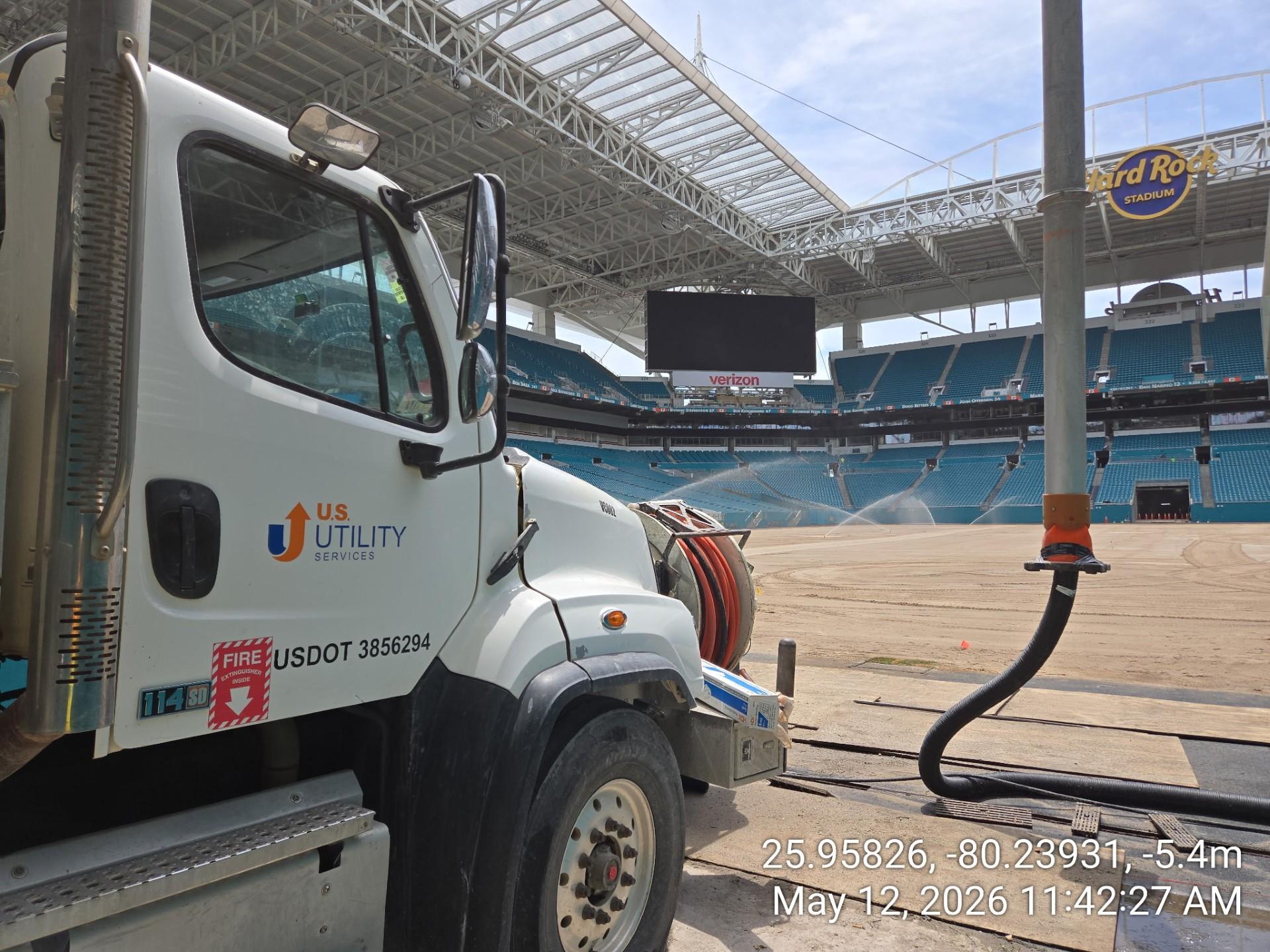
Every year, utility strikes during excavation cause billions of dollars in damage, disrupt critical infrastructure, and — too often — claim lives. The fundamental problem is simple: traditional mechanical excavation equipment is powerful but indiscriminate. A backhoe bucket exerts thousands of pounds of force and cannot tell the difference between soft clay and a pressurized gas main buried 18 inches underground.
Soft dig vacuum excavation solves this problem entirely. In this article, we'll compare soft dig to traditional excavation methods, explain how soft digging prevents utility strikes, and outline when each method is appropriate.
What Is Soft Dig?
Soft dig — also called vacuum excavation, air excavation, or potholing — is a non-destructive excavation method that uses compressed air or low-pressure water to gently loosen soil, paired with a powerful industrial vacuum to remove the loosened material. The key word is "gently." Unlike hydro excavation's high-pressure water stream or a backhoe's mechanical force, soft dig introduces air or water at pressures carefully calibrated not to damage buried infrastructure — even on direct contact.
The result is an excavation method that can expose buried utilities — gas lines, water mains, fiber optics, electrical conduits, sewer pipes — with the precision of a surgical tool rather than a sledgehammer. Operators maintain complete visual access to the excavation as it progresses, stopping the moment a utility comes into view.
Traditional Excavation: The Risk Profile
Traditional mechanical excavation includes backhoes, excavators, trenchers, and vacuum digging with mechanical loosening. These methods are efficient and cost-effective in open areas with no underground utility conflicts. On a greenfield site with no utilities present, a backhoe is entirely appropriate.
The problem arises near existing underground infrastructure — which, in Florida's urban and suburban environments, means virtually every excavation site. South Florida's utility corridors contain multiple overlapping utilities: water mains, sanitary sewers, storm drains, gas distribution lines, electric conduits, telecom cables, and fiber optic networks, often all within the same narrow right-of-way. A mechanical excavator moving through this environment is navigating a minefield.
Even with 811 Sunshine State One Call utility marking, mechanical excavation presents risks. Utility marks are approximate — they show the general location of a utility within a "tolerance zone" that may be up to several feet wide. Utilities are sometimes deeper or shallower than expected. Old infrastructure may not be accurately mapped at all. In all of these situations, the only safe approach near the tolerance zone is non-destructive excavation.
The Real Cost of a Utility Strike
Contractors who skip non-destructive methods to save time or budget often discover that the economics don't work in their favor. A single utility strike can generate:
- Emergency repair costs ranging from thousands to hundreds of thousands of dollars, depending on the utility struck
- Project shutdown while the utility owner investigates and repairs the damage
- OSHA investigation and potential fines if the strike causes injury or presents imminent danger
- Liability exposure for injury to utility crews, the public, or property
- Service outage costs if the utility serves residential or commercial customers
- Environmental remediation costs for fuel or chemical pipeline strikes
By contrast, a professional soft dig vacuum excavation crew typically charges a fraction of any of these costs to safely expose the utilities in question before mechanical work begins.
When to Use Soft Dig vs. Traditional Excavation
The decision framework is straightforward:
Use soft dig when: You're within the tolerance zone of any underground utility mark, you need to verify the exact location or depth of a utility before mechanical excavation, you're working near sensitive infrastructure (fiber, electric, gas), you're in a tight urban environment where mechanical equipment is impractical, or your project specifications, FDOT requirements, or the utility owner requires non-destructive excavation.
Traditional excavation is appropriate when: You're working in an area with confirmed absence of underground utilities, or you're doing mass excavation well clear of any utility zones where the risk profile supports mechanical methods.
The Industry Has Already Made the Choice
The utility and construction industries have largely resolved this debate. FDOT requires hydrovac potholing before mechanical excavation in state right-of-way. Gas utilities categorically require non-destructive excavation near their infrastructure. Municipal utility owners increasingly specify non-destructive methods in their project specifications. Insurance underwriters are increasingly scrutinizing whether non-destructive methods were used when utility strikes occur.
The question for contractors in South Florida is no longer whether to use non-destructive excavation — it's which provider to call. US Utility Services provides soft dig vacuum excavation and hydro excavation services throughout Miami, Fort Lauderdale, West Palm Beach, and all of South Florida. Contact us for a free project consultation.

